Theravada, meaning “the way of the elders,” is one of the three major schools of Buddhism and one of the oldest surviving Buddhist traditions, tracing its scriptures to the Pali Canon. Dominant in Sri Lanka, Myanmar, Thailand, Laos, and Cambodia, Theravada emphasizes monastic discipline, ethical conduct, and the direct cultivation of insight through meditation. Theravada monastics preparing to accept alms, or dana, from lay followers. Theravadins hold that their tradition preserves the Buddha’s teachings with particular fidelity. They see this inheritance as passed down through an unbroken monastic lineage rather than through later doctrinal innovation. The tradition also presents itself as closest to the original teachings of the Buddha.
Its historical roots date to around the 3rd century BCE, a couple of hundred years after the Buddha. This connects it to the earliest days of Buddhism. Monastic life is central to Theravada. Monks and nuns observe hundreds of precepts, including refraining from eating after noon and handling money. Lay followers support them and uphold five basic precepts: refraining from killing, stealing, sexual misconduct, lying, and intoxication. Both male and female renunciants exist, but fully ordained nuns are rare. Fully ordained monks and nuns are called bhikkhu (Pali; Skt.: bhiksu) and bhikkhuni (bhiksuni). For them, the goal of practice is nibbana (nirvana): the complete release from greed, hatred, and delusion. According to tradition, this realization unfolds over many lifetimes. Theravadins hold that only one fully awakened buddha appears in each era. Siddhattha Gotama (Siddhartha Gautama), who lived about 2,500 years ago, is the buddha of our time.
Milagros y relatos sobre el Buda en Theravada
The Buddhas must appear in the world so that others can learn the path to liberation. An exception is the paccekabuddha (pratyekabuddha), a solitary awakened one who attains enlightenment independently but does not teach. Theravada texts also describe progressive stages of awakening for ordinary practitioners. A stream-enterer will undergo no more than seven more rebirths. A once-returner will reach enlightenment in the next life. A non-returner is reborn in a higher realm and becomes awakened there. An arahant achieves full awakening in this lifetime, with no further rebirth. The buddha of our age, Siddhattha Gotama, lived for eighty years. Though fully human, the texts in all traditions describe him as possessing extraordinary qualities. Stories in the Pali texts recount his ability to perform miracles and exhibit superhuman abilities, such as flying, walking on water, or shaking the earth. Texts also credit some arthats with the same supernatural abilities.
Pali is a liturgical language written in local scripts. There is no single Pali script. Some of the oldest fragments of the Pali Canon date back to the 5th-6th century in Burma. The Pali canon is the foundational collection of scriptures in the Theravada tradition. The canon is called the Tipitaka-“three baskets” (Skt.: Tripitaka)-a term that may refer to the baskets used to store the palm-leaf manuscripts. Vinaya Pitaka: the code of conduct for monastics. Sutta Pitaka: a wide-ranging collection of discourses attributed to the Buddha and his close disciples. Over the centuries, Theravada communities have treated the Pali canon with great respect, chanting it during auspicious festivals and repeatedly copying it as a way of generating merit.
Beginning in 1860, King Mindon of Myanmar commissioned the carving of the entire canon onto marble tablets. It covers a range of philosophical, ethical, and contemplative topics, along with examples of the Buddha’s wit. The Ruwanweli Maha Seya, c. 140 BCE, in Anuradhapura, Sri Lanka, is a stupa that holds some of the Buddha’s relics. Buddhaghosa, a central figure in Theravada, helped shape classical Theravada through the Visuddhimagga and commentaries, while never labeling himself strictly as “Theravada.”
Historia y transmisión
One of the most important milestones is the arrival of Sri Lankan monks in the 11th century CE, which helped establish Theravada as the dominant tradition in Myanmar, Laos, Cambodia, and Thailand. When Sri Lanka’s monastic lineage collapsed, Burmese monks aided its revival. Ordination lineages have played a key role in maintaining continuity, and modern efforts to revive bhikkhuni ordination are ongoing, with recent recognition in some contexts. Today, Theravada Buddhism continues to thrive in Sri Lanka and mainland Southeast Asia.
Las escrituras y la tradición comentarial
There are many buddhas across vast spans of time, but only one arises in each world era. The Buddhavamsa, a Theravada chronicle of past buddhas, lists twenty-eight buddhas. Dipankara predicted that Sumedha would become the buddha of our era, Siddhattha Gotama. His enlightenment roughly 2,500 years ago marked the culmination of that long path. The Theravada tradition emphasizes a strong textual and monastic framework, with the Pali canon and commentarial tradition guiding doctrine and practice. Buddhaghosa’s Visuddhimagga is a cornerstone, and modern teachers such as Buddhadatta and Dhammapala continue to shape Theravada scholarship and practice.
La Vinaya y la vida monástica
In Theravada, there are both bhikkhus and bhikkhunis, though in many regions fully ordained nuns are rare due to vinaya requirements. The vinaya rule requiring a quorum of five bhikkhunis has posed ongoing challenges to revival. Laypeople support the monastic community and engage in merit-making, rituals, and education, reinforcing interdependence between renunciants and lay followers.
Laypeople tend to focus on merit-making and ritual observances rather than meditation, though monasteries provide spiritual guidance and perform rituals for families and communities. By donating the four requisites for renunciant life-food, robes, shelter, and medicine-laypeople generate merit for future lives, enabling monastics to pursue training. Monastic life includes a wide array of practices and social functions, including educating and caring for communities.
Milagros, ritualidad y prácticas devocionales
Many Theravada rituals are meritorious acts tied to karma and rebirth. Chanting Paritta sutras, tying sacred threads, tattoos, and amulets are common protective rites. Monks perform blessings, medical care, and apotropaic rites for laypeople. While some consider these practices superstitious, they are integral to rural and urban Theravada communities as expressions of faith and social cohesion.
El templo y las celebraciones comunitarias son centros de vida social y espiritual, con actividad diaria, donaciones y ceremonias que fortalecen la red de apoyo entre monásticos y laicos. A través de estas prácticas, los fieles buscan mejorar sus condiciones futuras y sostener a la comunidad monástica.
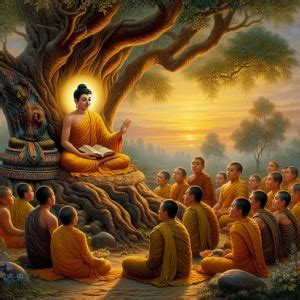
La narrativa de milagros también se utiliza para enseñar lecciones sobre sabiduría, compasión y el camino hacia la liberación, mostrando que los milagros pueden servir como herramientas pedagógicas para motivar a los seguidores a practicar con diligencia.
Los milagros en la tradición contemporánea
Los textos mencionan milagros atribuidos al Buda y a otros arthats, y las historias de milagros siguen siendo parte de la transmisión oral y escrita. En contextos modernos, los festivales, la veneración de relicarios y la recitación de textos sagrados continúan siendo centrales para la vida ritual Theravada.
Los relatos de milagros, como los de la vida del Buda durante el festival de Chotrul Duchen, ilustran el uso de poderes extraordinarios para enseñar y persuadir, destacando que la verdadera liberación supera cualquier espectáculo sobrenatural.
Tabla de conceptos clave
| Concepto | Descripción |
|---|---|
| Theravada | Camino de los ancianos; tradición más cercana a las enseñanzas originales del Buda |
| Sangha | Comunidad monástica; monjes y monjas que siguen preceptos y guían a laicos |
| Nibbana | Liberación total del deseo, el odio y la ignorancia |
| Pali Canon | Tipitaka: Vinaya Pitaka, Sutta Pitaka y Abhidhamma, base literaria |
| bhikkhu / bhikkhuni | Monje / monja plenamente ordenados |
En resumen, Theravada se define por su énfasis en la ética, la disciplina monástica y la práctica meditativa directa para la realización de la liberación, manteniendo una transmisión continua desde los primeros días del Buda y una fidelidad textual y doctrinal que le sirve de guía en los siglos.