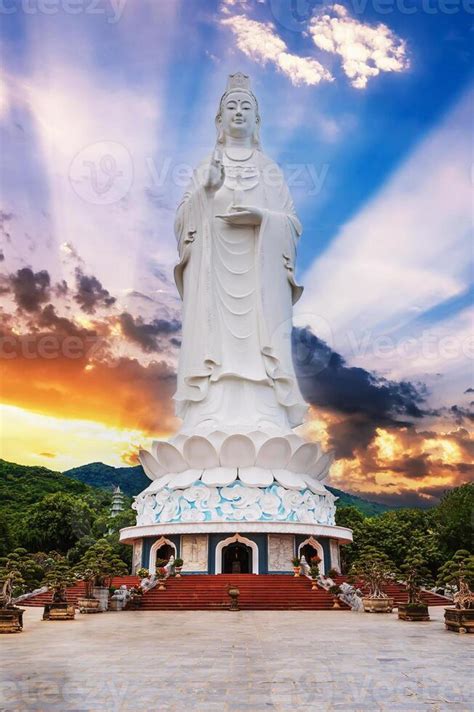
Located on the Son Tra Peninsula, the Lady Buddha in Da Nang is a must-visit landmark that brings together spirituality, architecture, and coastal scenery in one remarkable setting.
Lady Buddha Da Nang stands at the Linh Ung Pagoda on the Son Tra Peninsula, approximately 10 kilometers northeast of Da Nang’s city center. The statue is positioned on a hillside overlooking the East Sea, with her gaze cast over Da Nang Bay. From this vantage point, visitors can enjoy panoramic views of the city, coastline, and lush mountains.
The Lady Buddha statue in Da Nang has rapidly become a standout attraction in Vietnam, drawing visitors not just for its spiritual value but also for its striking beauty and unique location. Towering at 67 meters, the Lady Buddha is the tallest statue of its kind in Vietnam. Its sheer height makes it visible from nearly every corner of Da Nang, from My Khe Beach to the city’s airport.
Built within the Linh Ung Pagoda complex, this colossal structure features 17 levels inside, each housing a different Buddha shrine. The elegant design of the statue, representing the Goddess of Mercy (Quan The Am), blends traditional Vietnamese architecture with a modern sense of scale. The Lady Buddha statue is deeply rooted in local beliefs and Buddhist traditions. For generations, she has been honored as a divine protector of Da Nang’s fishermen and a spiritual guardian of the sea.
Visitors from across Vietnam come here to pray for well-being, inner peace, and blessings for their families. The spiritual atmosphere is unmistakable. The air is filled with the scent of incense, temple bells ring gently in the distance, and monks chant in quiet reverence.
Located on the verdant slopes of the Son Tra Peninsula, the Lady Buddha enjoys an exceptional setting that enhances its appeal. The area is part of the Son Tra Nature Reserve, known for its rich ecosystem and rare wildlife, including the endangered red-shanked douc langur. Many travelers choose to explore nearby trails, enjoy scenic motorbike routes, or simply relax in the peaceful surroundings.
What adds to the Lady Buddha’s allure is a rare natural spectacle that occasionally appears around her head: a glowing halo effect. This atmospheric optical phenomenon, created by light diffraction through moisture in the air, has been witnessed by both locals and tourists. The appearance of the halo is seen by many as a sign of divine presence, deepening the emotional and spiritual connection visitors feel when standing before the statue.
The Lady Buddha statue in Da Nang is one of Vietnam’s most significant spiritual landmarks, reflecting both deep-rooted local beliefs and remarkable modern craftsmanship. Construction began on August 4, 2004, alongside Linh Ung Bai But Pagoda, on a hill nearly 100 meters above sea level on the Son Tra Peninsula. The project experienced a major turning point in its early years. The first version of the statue, completed after more than three years of work, was dismantled due to design differences that did not align with traditional Vietnamese representations of Guan Yin (the Goddess of Mercy). A new statue was then constructed on the same foundation, involving 12,000 scaffolding frames and a workforce of around 50 skilled laborers. The final design was crafted under the close supervision of renowned Vietnamese sculptors Thuy Lam and Chau Viet Thanh. The statue features a serene facial expression, flowing robes, prayer beads, a vase of holy water, and the symbolic Samadhi hand gesture.
The spiritual roots of the Lady Buddha statue trace back to the early 19th century, when local fishermen reportedly discovered a small statue of the Goddess of Mercy on a beach at Son Tra Peninsula. After six years of construction, the Lady Buddha statue was officially inaugurated on July 30, 2010. Standing 67 meters tall, it became the tallest Buddha statue in Vietnam at the time.
A visit to the Lady Buddha is more than a quick sightseeing stop. The Linh Ung Pagoda complex is the heart of the Lady Buddha site and sets the tone for the entire visit. As you walk through the grounds, you’ll notice peaceful courtyards, carefully shaped bonsai trees, stone guardians, and ornate temple roofs. Many visitors admire the Lady Buddha from afar without realizing there is more to experience inside. The statue contains multiple levels, each featuring shrines dedicated to different Buddhas and teachings. One of the most rewarding aspects of visiting the Lady Buddha is the view. From the terraces and open viewpoints, you can see My Khe Beach, the city skyline, and the endless coastline stretching toward the horizon. This site remains an active place of worship, making it an ideal location to observe local spiritual life.
Locals regularly bring offerings such as fruit, flowers, and incense, stopping to pray quietly at various altars. After exploring the main areas, slow your pace and enjoy the quieter corners of the complex. Stone pathways lead through landscaped gardens, small courtyards, and statues of Bodhisattvas representing compassion and wisdom. The Lady Buddha is only one highlight of Son Tra Peninsula, an area known for its raw natural beauty. Scenic coastal roads lead to hidden beaches, forest viewpoints, and quiet bays rarely touched by mass tourism. Timing your visit for late afternoon adds a special layer to the experience. At sunset, the Lady Buddha glows softly against the sky, while the city below begins to light up.
The best time to visit Lady Buddha Da Nang is during the dry season, from March to September, when the weather is stable, skies are clear, and visibility across the coastline is at its best. March to May stands out as the ideal window. Temperatures are warm but not extreme, humidity is manageable, and rainfall is minimal. June to August remains a good choice, especially for those visiting Da Nang in summer. From September to January, Da Nang enters the rainy season. Heavy showers, occasional storms, fog, and slippery roads can affect safety and limit panoramic views. Early Morning (6:00 - 8:00 AM): This is the most recommended time. The air is cool, the site is quiet, and the atmosphere feels deeply spiritual. Late Afternoon & Sunset (4:00 - 6:00 PM): Golden-hour light creates dramatic views over Da Nang city, the coastline, and nearby islands. Evening (after 7:00 PM): The statue is beautifully illuminated against the dark backdrop of Son Tra Peninsula. Dry Season (February - August): Clear skies, excellent visibility, and the best overall experience. Rainy Season (September - January): Fewer crowds and lush greenery, but rain and cloud cover may reduce views. Festivals and Special Dates: During major Buddhist events such as Vesak and Lunar New Year, Linh Ung Pagoda becomes a focal point for local worship. The atmosphere is lively and culturally rich, with incense, lanterns, and prayers filling the space. Practical Local Tip: To avoid midday heat and peak tour bus traffic, plan your visit for early morning or late afternoon.
The drive from Da Nang International Airport to Lady Buddha takes about 25-30 minutes. Walking is popular in the early morning or late afternoon when the weather is cooler. There is only one access road, Hoang Sa Street, making navigation simple. After passing Dong Dinh Museum, monkeys often appear near the road. The pagoda entrance is on the left side. Riding a motorbike is one of the most enjoyable ways to reach Lady Buddha. From the Hoang Sa - Le Duc Tho intersection, ride about 2.5 km to find the pagoda entrance on the left, marked by two stone lions. Continue uphill to the scooter parking area. There is no parking fee; visitors usually leave a small donation when departing.
From Hoi An, the distance is roughly 30 km, taking about one hour by motorbike. By car, Linh Ung Son Tra Pagoda is about 20 minutes from Da Nang city center and 15 minutes from My Khe Beach. Public buses run to Tho Quang station near the Hoang Sa - Nguyen Phan Vinh intersection. Appropriate clothing: Modest attire is required in this sacred area. Footwear rules: Shoes must be removed when entering inner temple halls and shrines. Walking conditions: The site includes paved paths and steep staircases. Photography awareness: Photos are welcome in outdoor areas. Weather readiness: From September to January, sudden rain showers are common, so a rain jacket or poncho is useful. Incense and offerings: Visitors may bring fruit, flowers, or incense to the altars. Wildlife protection: The Son Tra Peninsula is home to endangered species like the red-shanked douc langur.
Son Tra Peninsula Scenic Drive: A coastal mountain road with sweeping views of the sea, jungle, fishing villages, and Da Nang skyline. Yes. Lady Buddha Da Nang combines a major spiritual site, striking architecture, and one of the best panoramic viewpoints in the city. No. Entry is free. Plan 60-90 minutes for the statue, main halls, and viewpoints. Yes, with a few notes. The main areas are accessible and family-friendly, but there are stairs, sloped paths, and occasional steep sections. Photography is generally allowed outdoors, including the statue and courtyards. Inside prayer halls, follow posted signs, keep noise low, and avoid flash, especially during worship. Yes. The site is typically open into the evening, and the statue is beautifully illuminated after dark. For the best experience, arrive before sunset, enjoy golden-hour views, then stay briefly for the night scenery. Hopefully, this guide helps you plan a meaningful visit to the Lady Buddha in Da Nang with confidence. You now have a clear understanding of where the statue is located, why it holds such spiritual and cultural importance, the best times to visit, how to get there, and what to experience around Linh Ung Pagoda and Son Tra Peninsula.
Si prefieres una experiencia fluida, Your Vietnam Travel puede ayudarte a diseñar un itinerario flexible y bien aprovechado que se ajuste a tu estilo y agenda.
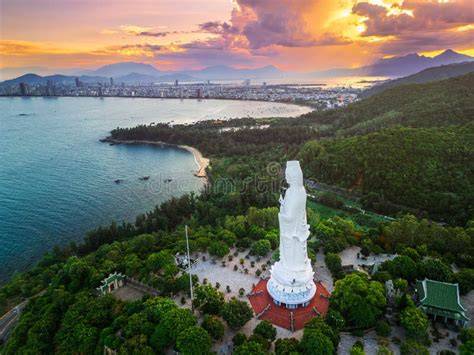
What is Lady Buddha Da Nang? Sitting on a hilltop by the sea, Lady Buddha is a 67-meters-tall statue in Linh Ung Pagoda Son Tra Peninsula. It’s known as Tuong Phat Ba Quan Am in Vietnamese or Statue of the Goddess of Mercy. Thanks to its height, this work became the tallest of its kind in the country. Not only being a statue, Lady Buddha is a temple also, because each of its 17 floors houses twenty-seven Buddha statues for worship. A 2-meter Great Buddha statue is placed in the head. Local people call “Buddha in Buddha” to describe the characteristic. On the first and 15th days of every lunar month, locals come here to pray and seek peace of mind. Note: In the surrounding, naughty monkeys that can snatch food and personal items from the hands of visitors, should be aware!
Meaning of Lady Buddha Da Nang. Lady Buddha is the Goddess of Mercy who is believed to see, hear and sympathize cries of people in the world. Her right hand holds a water vase, containing nectar of life and a willow branch in her left hand, used to sprinkle the nectar on the prayers. For fishers, she also is a patron saint who follows, gives fortune and saves them on the sea. That’s why they come to pray before setting sail. Standing on a blooming lotus, this perfect depiction faces the city, aiming to shelter its citizens from disasters. Locals have been believing that since her presence, typhoons don’t hit their hometown.
History and Construction of Lady Buddha Da Nang. The Statue of the Lady Buddha was built at the same time as Linh Ung Pagoda, from 2004 to 2010. Construction of this pair was initiated by Thich Thien Nguyen monk who became the leader of Linh Ung pagoda in the Marble Mountains. Just about the statue, skillful artisans from Non Nuoc marble village in those hills, were responsible in forming. Two sculptors Thuy Lam and Chau Viet Thanh who had experiences in other huge works, were in charge of giving the soul and attitude to her. During the construction, people saw the glories occuring 13 times. One of the most unforgettable times for Buddhists is Buddha’s birthday in 2009. Money used to build it was from donations of monks, followers, locals and firms.
Lady Buddha Da Nang Ticket. Now, Da Nang’s Lady Buddha requires no ticket to enter and visit it. Locals often drop a small amount of money into donation boxes, to fund monk life, activities and charity. For parkings, many people do the same (although also free of charge).
Da Nang Local Guide. Lady Buddha and its neighbor, Linh Ung Pagoda Son Tra Peninsula are famous Buddhist sites in the city. Both have their own grand architecture and interesting stories linked with Buddhism and Buddha teachings. Not far from there, visitors have the chance to explore stunning places, including sandy beaches, snorkeling spots, peaks, old trees and Vietnam war memorial sites. If traveling with a local guide, all of them can be arranged properly, based on the visitor’s requirements and his/her experiences. Moreover, he also shares history, architecture, and everything around every stop, in fluent English. Your itinerary includes extra Cham museum, Marble mountains, Hoi An old town or My Son sanctuary, a local guide is really necessary. Because of being free to sightsee, visitors can come anytime within this, as long as their trip is convenient. During the typhoon season, its doors may be closed to ensure visitor’s safety.
- Best Time to Visit Lady Buddha Da Nang: Dry season from March to September; March-May ideal.
- How to Get There: car, motorbike, taxi or Grab; Hoang Sa Road access; Monkey sightings near Dong Dinh Museum.
- What to Expect: 17 levels, shrines, panoramic views, spiritual atmosphere, and peaceful grounds.