El Gran Buda de Kamakura (Kamakura Daibutsu): historia, datos y lugares para visitar

Si te apetece hacer una excursión desde Tokio a algún destino cercano, puedes valorar visitar el territorio samurái por excelencia: Kamakura. Hablar de Kamakura es hacer honor a los guardianes y guerreros samuráis capaces de apostar su vida por su honor y sus valores. En el Japón feudal, Kamakura se convertía en la primera ciudad más próxima a Tokio. Buda de Kamakura: icono de Japón muy cerca de Tokio.

Qué es el Gran Buda de Kamakura

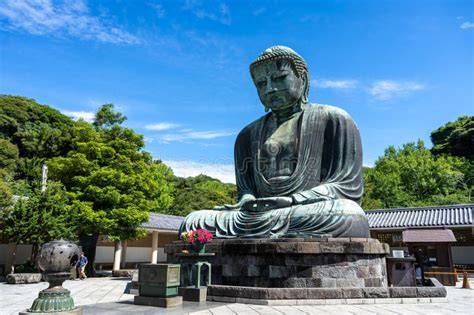
El Gran Buda de Kamakura (大仏, daibutsu) es una estatua de bronce del Buda Amida de 13,35 metros de alto y unas 93 toneladas de peso. Con estas medidas, es el segundo Buda más grande de Japón en posición sentada, por detrás del Gran Buda del templo Tōdai-ji, en Nara. The bronzed Great Buddha of Kamakura or Kamakura Daibutsu dates back to the 13th century and is the second tallest bronze Buddha in Japan. Located at Kōtokuin Temple 高徳院 in Kamakura, this giant bronze statue embodies Amida Nyorai. Roughly 11.3 meters in height (13.35 meters with pedestal) and weighing 125 tons, the Kamakura Daibutsu was financed entirely with donations from devotees and commoners (no aid from the imperial court or the Kamakura shogunate).

El Buda de Kamakura fue construido en 1252 y se encuentra en el templo Kōtoku-in, en un entorno natural al aire libre rodeado de jardines que magnifican su poderío espiritual. The statue was cast in 1252 and originally located inside a large temple hall. Like the statue in Nara, the Daibutsu was originally housed inside a temple building after its casting in the 13th century.

Gran Buda de Kamakura estatua exterior

Historia y evolución

Todo indica que la estatua se construyó en 1252, en pleno periodo Kamakura, aunque los registros no son claros. The new statue was cast by Tanji Hisatomo 丹治久友, Ōno Gorō-uemon 大野五郎右衛門, and others. The Kamakura Daibutsu sits in the grounds of Kotokuin, a temple belonging to the Jodo Sect of Buddhism. The Jodo are committed to the liberation of all beings, meaning the Great Buddha is there for all: saints and sinners, rich and poor, young and old.

La estatua fue originalmente alojada en una estructura de madera, pero esa estructura fue destruida varias veces por tifones y un tsunami en los siglos XIV y XV. In 1335, a violent storm swept away the main wooden hall housing the statue (the latter was unharmed), but some 500 samurai, remnants of the then-defeated Hōjō, had entered the building to seek refuge from the storm. They were all crushed to death. A new hall was created thereafter to house the statue. In 1495, Kōtokuin (Kotokuin) suffered yet again from an earthquake and tsunami wave, and the structure housing the statue was once more destroyed -- but the statue was undamaged. It has sat outdoor, unsheltered from the weather, ever since.

En los siguientes siglos la estatua sufrió abandono y deterioro hasta que, a principios del siglo XVIII, un sacerdote de Zōjōji llamado Yūten lideró un plan de restauración y comenzó a recaudar contribuciones en 1712. To commemorate Yūten and other contributors, four bronze lotus pedals were erected & engraved with their names (found today at the rear of the statue). En 1923, la base fue dañada por el Gran Terremoto de Kanto y posteriormente reparada. En 1960, el cuello y la base recibieron refuerzos para resistir futuros seísmos.

Características artísticas y simbólicas

Amida (Skt. = Amitābha), que significa Luz y Vida Infinitas, es uno de los salvadores más elevados del budismo japonés, y la fe en Amida está especialmente vinculada a las sectas de la Tierra Pura (Jōdo). The key practice for Amida devotees is to chant Amida’s nenbutsu 念仏 (devotional invocation, formulaic prayer), which is Namu Amida Butsu 南無阿弥陀仏. Amida vowed that whoever calls his name with faith shall be reborn in his Western Pure Land.

La estatua presenta una serie de datos llamativos: la cara mide casi 2,5 metros de largo y en la cabeza hay 656 rizos de cabello. Says Kondo Takahiro: “A close look at the statues reveals several slight horizontal lines. This tells us that it was a patchwork made with eight pieces of bronze. Even today's technology, however, cannot find out precisely how it was cast and built. The original statue may have been quite different in appearance from what we see today. It was gilt all over and would have been glittering. Over time, the gilt came off, and today you can recognize traces of the original gilt only in the ears.”

Visitar el Daibutsu: guía práctica

El Kamakura Daibutsu se encuentra en los terrenos del templo Kotokuin. To the right of the Buddha hangs a pair of 1.8 meter-long warazori straw sandals. Other sites of interest include Niomon gate, the richly colored entrance where the temple's two protecting Deva Kings reside. Behind the Buddha stands Kangetsudo Hall which started life as part of the imperial palace in 15th-century Seoul before being moved first to Tokyo and then to Kamakura. It contains an Edo period image of Kannon Bosatsu, the Goddess of Mercy.

El templo abre de 06:00 a 17:30 horas (hasta las 17:00 horas en invierno). Es importante recordar que si visitas Kamakura en invierno, los horarios de cierre se adelantan a las 16:30 hrs. Tickets to Kotokuin cost 200 yen, with an additional 20 yen charge to go inside the Buddha. Plan to spend 30 minutes to see the Kamakura Daibutsu and the other treasures at Kotokuin Temple without feeling rushed.

La visita incluye la posibilidad de subir al interior de la estatua por solo 20 yen. But typically no one sits outside collecting money -- it's the honor system. Kotokuin is very well set up for visitors of restricted mobility, with a well signposted barrier-free route.

Cómo llegar desde Tokio

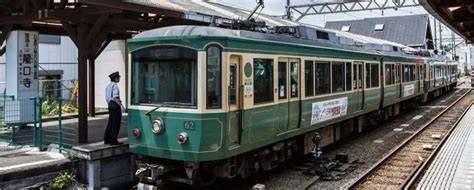
A visit to the Kamakura Daibutsu is an easy day trip from Tokyo. From Tokyo, take the Shonan Shinjuku line from Shinjuku Station to Kamakura Station. From there, transfer to and take the Enoshima Electric Railway towards Fujisawa and get off at Hase Station. The Great Buddha is a 7-minute walk from there. The Great Buddha is located a 5-10 minute walk from Hase Station, the third station from Kamakura along the Enoden railway line. The Enoden is a streetcar-like train that connects Kamakura with Enoshima and Fujisawa.

Desde la estación de Kamakura, el Gran Buda está a unos 25 minutos andando. Si vas desde la estación de Hase, sólo está a 10 minutos andando. Evita las horas punta, domingos y festivos: sobre todo en los más populares.

Enoden tren hacia Hase y Kamakura

Otros templos y lugares de interés en la región

En la región podrás visitar otros templos zen que también vale la pena valorar su visita, como Engaku-ji, Meigetsu-in, Kencho-ji, Hase-Kannon. Sin embargo uno de los más recomendables, como ya hemos dicho, es el Hasedera o Hase-dera que data del año 736. Some have over a thousand years. But all share something in common: they were not made only to be seen.

El Kamakura Daibutsu es un punto de partida ideal para recorrer el patrimonio religioso y samurái de la ciudad, incluidas visitas a santuarios como Tsurugaoka Hachimangu y playas cercanas como Yuigahama o Koshigoe Beach.

Alojamiento recomendado en Kamakura

Hotel Ao Kamakura in Kamakura offers rooms with sea views, terraces, and modern amenities. Guests can enjoy Japanese cuisine at the on-site restaurant, which serves lunch and dinner. The hotel features a terrace, restaurant, and free WiFi in public areas. Located a few steps from Koshigoe Beach and 43 km from Tokyo Haneda Airport.

Hotel Metropolitan Kamakura in Kamakura offers spacious rooms with air-conditioning, private bathrooms, and modern amenities. The family-friendly restaurant serves Japanese and European cuisines for lunch and dinner. Located 15 minutes from Yuigahama Beach and less than 1 km from Tsurugaoka Hachimangu Shrine.

KAMAKURA Hotel in Kamakura offers 4-star comfort with air-conditioning, private bathrooms, and modern amenities. Guests enjoy a bar and free WiFi, a lift, 24-hour front desk, concierge service, daily housekeeping, and luggage storage. Located 40 km from Tokyo Haneda Airport, the hotel is a 16-minute walk from Yuigahama Beach and 1.1 km from Tsurugaoka Hachimangu Shrine.

KIYAZA RESORT Kamakura offers family rooms with private bathrooms, air-conditioning, and garden views. Guests can relax on the sun terrace, enjoy the seasonal outdoor swimming pool, and utilise the lounge. Located 41 km from Tokyo Haneda Airport, the guest house is a 2-minute walk from Zaimokuza Beach.

Guest House Kamakura Zen-ji offers direct beachfront access and a serene garden. The guest house features adults-only rooms with shared bathrooms, air-conditioning, and garden or inner courtyard views. BIRD HOTEL offers air-conditioned rooms with private bathrooms, balconies, and garden views. Tosei Hotel Cocone Kamakura offers family rooms with air-conditioning, private bathrooms, and free WiFi, and features a public bath and hot tub. Guesthouse SHIBAFU offers comfortable rooms with air-conditioning, private bathrooms, and garden views.

Playa Yuigahama paseo frente al mar

El Daibutsu en el contexto de otros grandes budas de Japón

Of the three most widely known giant effigies of Buddha from old Japan, only the Kamakura Daibutsu (11.3 meters) remains in original form. The Nara Daibutsu (15 meters) was recast, while the famous Kyoto Daibutsu (24 meters) was entirely destroyed in a fire. Located at Tōdaiji Temple 東大寺 in Nara, this bronze statue embodies Birushana Nyorai and at 15 meters (without pedestal) and weighing 250 tons, it is reportedly the largest gilt-bronze effigy in the world.

The oldest surviving Daibutsu sculpture in Japan, cast in 609 AD, is the Asuka Daibutsu (2.75 meters). The largest stone-carved Daibutsu in Japan is the Daibutsu of Nihon-ji (31 meters), chiseled into a stone cliff during the 1780s. The largest Big Buddha statue in Japan -- and reportedly worldwide -- is the recently constructed 100-meter Ushiku Daibutsu in Ibaraki Prefecture, just 50 km from Tokyo.

Tabla comparativa: características principales

Estatua Altura (m) Peso (toneladas) Material Ubicación
Kamakura Daibutsu ≈11.3 (13.35 con pedestal) ≈93-125 Bronce Kōtokuin, Kamakura
Nara Daibutsu (Tōdai-ji) 15 ≈250 Bronce (dorada) Tōdai-ji, Nara
Ushiku Daibutsu 100 Moderno Acero/bronze moderno Ibaraki

Consejos y recomendaciones

Evita las horas punta, domingos y festivos: sobre todo en los más populares. CONSEJO: no olvides tu seguro de viaje para Japón. Nosotros contratamos siempre Intermundial por sus coberturas. Y con el código de descuento JAPONSECRETO10 te ahorrarás un 10% aquí. Cuanto más grande, más accesible emocionalmente. Ese gesto simbolizaba que el Buda «abre los ojos» al mundo.

El gran Buda de KAMAKURA - Santuario Hachiman

Si te gusta escuchar podcast y te interesa todo lo que puedes hacer en Kamakura, como este Gran Buda, estás de suerte. En Japón a fondo tenemos un episodio detallado sobre esta ciudad.

tags: #il #grande #buddha #giappone